
CircSolar – A Circular System for Solar Panels in Sweden
Solar energy plays an important role in Sweden’s transition to a fossil-free energy system. At the same time, a new stream of products and materials is emerging as more solar panels are installed and eventually taken out of service. CircSolar brought together researchers, companies, and organizations from across the solar panel value chain to explore how Sweden can better preserve the value of panels and materials throughout their life cycle. The project resulted in Sweden’s first circular roadmap for solar panels and six policy recommendations outlining how more functioning panels can remain in use longer, how materials can be recycled at a higher value, and how producer responsibility can work more effectively in practice.
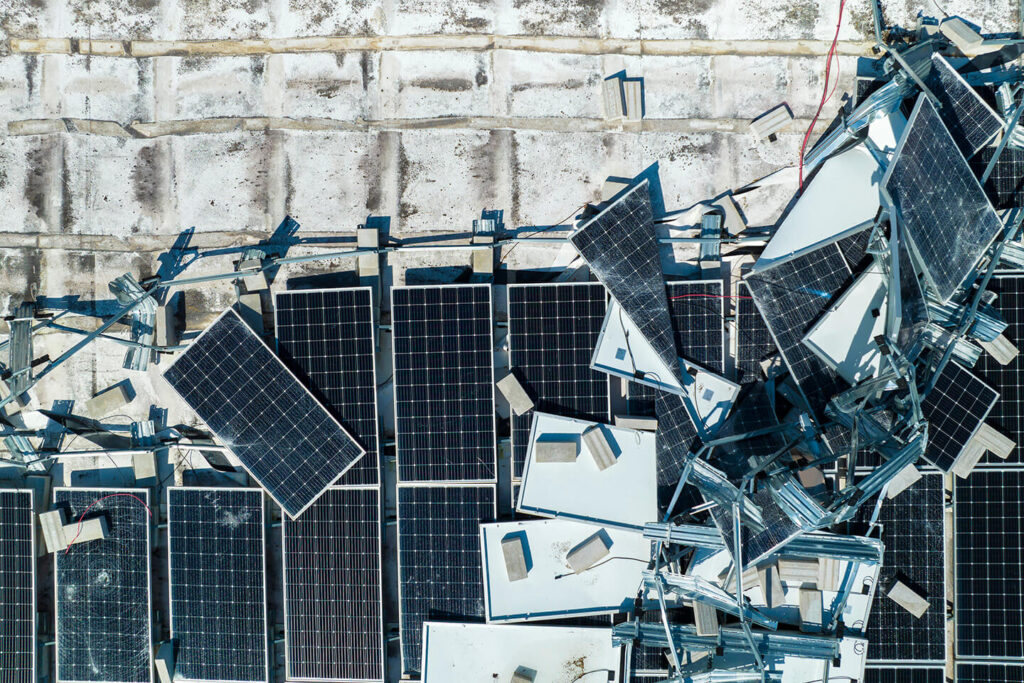
Solar panel waste could reach more than 100 million tons by 2050. (Photo: iStock)
The Issue
Solar energy is one of Sweden’s fastest-growing sources of energy. Although the volume of solar panels currently being taken out of service remains small, it is expected to increase significantly. By around 2060, Sweden may need to manage between 40,000 and 150,000 metric tons of end-of-life solar panels each year. At the upper end of this range, that would exceed all the electronic waste collected in Sweden in 2024. The current system is not prepared for this development. Functioning panels risk becoming waste prematurely because established systems for testing, quality assurance, and reuse are lacking. Panels that can no longer be used are often handled together with other electronic waste, making specialized materials recycling more difficult and increasing the risk that valuable materials will be lost or recycled at a lower value. This is not only a waste issue. It is also about preserving the value of products and materials already in circulation and building effective systems before volumes become substantial.
We wanted to develop solutions that benefit the entire system. We therefore brought together researchers and practitioners from multiple parts of the value chain – from installers and industry associations to recyclers and producer responsibility organizations.
– Johanna Olofsson Behrman, Project Manager Future Materials, Axfoundation
Our Solution
CircSolar examined the entire solar panel value chain from a systems perspective – covering design, procurement, and installation to use, reuse, materials recycling, and producer responsibility. The project combined research and analysis with the knowledge and experience of stakeholders throughout the value chain. The work examined the current system, explored why panels are taken out of service and how they could remain in use longer, and identified the measures needed to develop a more circular system. The results were consolidated into a circular roadmap that provides companies, government agencies, policymakers, and other stakeholders with a shared direction for continued action.
Did you know…
- A typical solar panel consists primarily of glass, aluminum, plastic, and silicon, along with smaller amounts of valuable metals such as silver and copper.
- Solar panels taken out of service have not necessarily reached the end of their useful life. Many still function and can sometimes be repaired, reinstalled, or otherwise kept in use instead of becoming waste prematurely.
- By around 2060, Sweden may need to manage between 40,000 and 150,000 metric tons of end-of-life solar panels each year.
- An estimated 21–35 million metric tons of end-of-life solar panels will be generated across the EU by 2050.
- RISE estimates that making dedicated solar panel processing economically viable in Sweden may require an annual inflow of approximately 10,000 metric tons.
- Swedish volumes remain small, while specialized materials recycling capacity is already being developed elsewhere in Europe. This creates an opportunity to use European capacity in the short term and develop Swedish capacity as domestic volumes increase.
Our Work
Axfoundation led CircSolar from 2023 to 2026, bringing together stakeholders with different roles and perspectives across the solar panel value chain. Together with KTH and the other project partners, the project combined research and systems analysis with practical knowledge from installers, recyclers, producer responsibility organizations, and other stakeholders.
Axfoundation’s role was to create a shared platform for moving from an understanding of the problem and analysis of the system to concrete measures and a common direction for future action.
Results
CircSolar demonstrated that Sweden has an important window of opportunity to act before large volumes of solar panels begin to be taken out of service. The project’s analyses also showed that panels removed from installations do not constitute a uniform waste stream. Some have reached the end of their useful life, while others still function or can be repaired and used again. By better preserving their remaining functionality and material value, these panels can continue to create economic value instead of becoming waste.
The project resulted in Sweden’s first circular roadmap for solar panels, featuring concrete measures across the value chain, as well as six policy recommendations for the Swedish government and government agencies.
Three conclusions stood out:
- Functioning solar panels need to remain in use longer. Maintenance, repairs, testing, quality assurance, and reinstallation can help panels retain their value and prevent them from becoming waste prematurely.
- Material value must be preserved through specialized materials recycling. Sweden can build capacity gradually by using established European recycling capacity while domestic volumes remain small and developing Swedish capacity as material flows increase.
- Producer responsibility, traceability, and data need to work more effectively in practice. Clearer responsibilities and better information about future solar panel flows are needed to plan, finance, and develop systems for reuse and materials recycling.
Download the roadmap summary.
Download the policy recommendations.
Next Step
CircSolar concluded in 2026 with a roadmap and policy recommendations that provide value-chain stakeholders, government agencies, and policymakers with a shared foundation for continued action.
The next step is to put the roadmap’s measures into practice. This will require action by producers and importers, installers, solar installation owners, reuse operators, recyclers, producer responsibility organizations, government agencies, and policymakers, among others.
Axfoundation’s involvement in CircSolar ended when the project concluded. KTH will continue to advance knowledge and research in this field and will serve as the point of contact for questions about further research related to CircSolar.
Partners
CircSolar was led by Axfoundation in partnership with El-Kretsen (a Swedish provider of collection systems for consumer electronics), KTH Royal Institute of Technology, REMONDIS, Stena Recycling, and Svea Solar. The project was carried out with funding from Vinnova.
Additional input has been provided by representatives from Svensk Solenergi, Green Power Sweden, SolTech Energy, Alight, INGKA Group / IKEA, The Sunshine Fund, EnergiEngagemang, Axsol, Alstra Energy, RISE, Driva, the Swedish Environmental Protection Agency and Glava Energy Center.
Contact


Updates on Future Materials
-

Wanted: A System for Longer Solar Panel Life
2025-11-24


